
What the Hands Remember
On calluses, chords, and what survives without asking permission

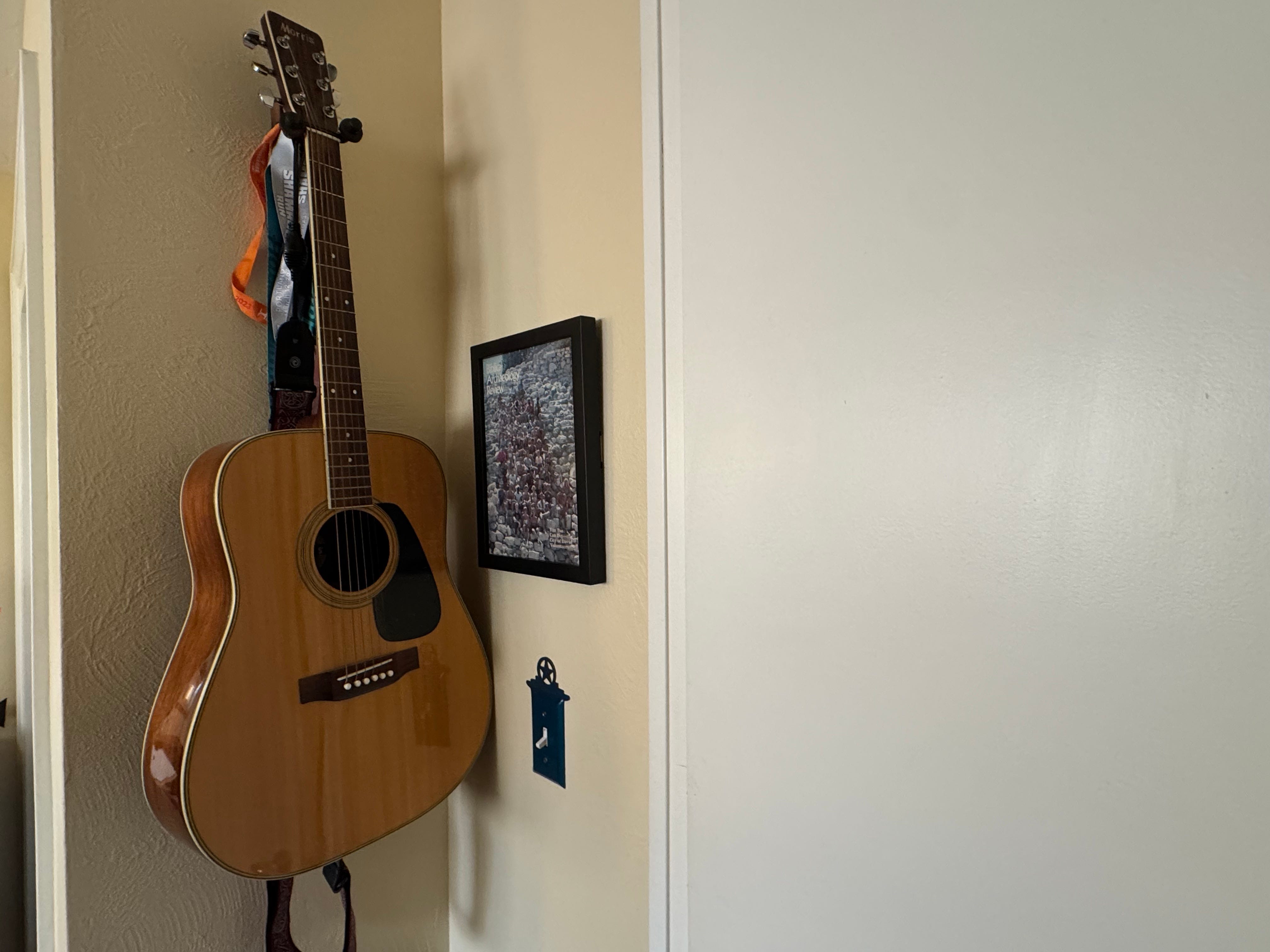
My guitar had been hanging on the same hook in my office for longer than I want to admit. It is not put away but out of reach in the way things become when you stop seeing them. I’d walk past it most days without giving it much thought. And it literally hangs right by the door of my office.
Then Glen Hansard died, and I took it down.
I don’t fully know why that was the thing that did it. I’d read the news about his accident, and that night I found myself watching old footage of him busking, that voice tearing itself open on every chorus like it cost him something to sing that way. I found myself watching video after video for hours. And somewhere in there I got up, lifted the guitar off its hook, and sat down with it for the first time in longer than I want to sadly say.
The tips of my fingers are soft. Twenty years ago they were calloused from playing, hard enough that I could barely feel a guitar string jam into them. And like most things in life, those hard layers of skin begin to fade away after time. It came back to me in about four minutes how fast, because that’s roughly how long it took before the pads of my fingers were stinging. I can feel the sting while I am typing these words now.
But here’s what surprised me. My fingers found the chord shapes.
I was working through Into the Mystic, a song I hadn’t played in maybe ten years, and my hand moved to an E chord like it had never left. It wasn’t because I remembered the chord. I didn’t, not consciously, not in the way I remember a birthdate or a scripture reference. My hand remembered it from its muscle memory.
I worked through some Glen Hansard songs next. After Googling guitar tabs for his songs, I fumbled through a couple of them and then drifted into old favorites, John Gorka, a little McCartney (I have to play some Macca), a couple of Dan Fogelberg tunes I used to play with little effort. Interestingly, I found my fingers wanted to go in shapes of chords that used to be there.
Then I attempted to remember a few songs I wrote myself many years ago. They were the kind of tunes that you write as a young man and think you’re going to be the next Lennon or McCartney. My voice cracked on the high parts. Candidly, I have lost the ability to sing the higher stuff now. And my timing was embarrassingly rough. But the shapes kept coming back, chord after chord, like they’d been waiting. Where they were hiding, I am not exactly sure.
I remember reading once about a man named Clive Wearing. He was a musicologist and conductor until a virus attacked his brain in 1985. The virus destroyed his ability to form new memories almost entirely. From accounts by his medical staff and his wife, Wearing’s memory span was a matter of mere seconds. He cannot tell you what happened five minutes ago. He would respond to his wife each day as if he hadn’t seen her in months.
But all of that changes when he sits down at his piano. His hands find the piece before his mind can tell you the piece exists. What is fascinating is that everything he knows, his memory, is gone. What his hands know is still there, somewhere locked inside him.
I am not comparing my fumbled guitar playing to what that man carries. His loss is devastating in a way mine isn’t and frankly never will be. But there is something true about how our bodies and nervous systems carry recordings and memories long after our minds forget.
There is such a thing as muscle memory in leadership.
The instinct to listen before you speak is something that you learn. The reflex of patience when someone is testing you. The habit of showing up each day ready to do your best. The conscious effort of telling the truth even when you know that it will cost you. We build those deeply enough, over enough years. They move into a place where they are effortlessly recalled. It’s the same place that held the shape of a chord for years without ever thinking about it.
But some of it doesn’t survive on its own. Some of it needs the boring work again. The calluses I lost, I must rebuild one sore fingertip at a time. Sadly, there’s no way around that part. I wish that there was a shortcut.
Leadership has a version of that too. There is the discipline to choose patience when life is challenging. The intentional pause to allow someone to speak and lean close to hear them out without responding. The striving to be humble throughout the day. When we set those down for long enough, or hang them on a wall, they go soft, the same way fingertips go soft. And it hurts to build them back into our lives again. And you know what, it should.
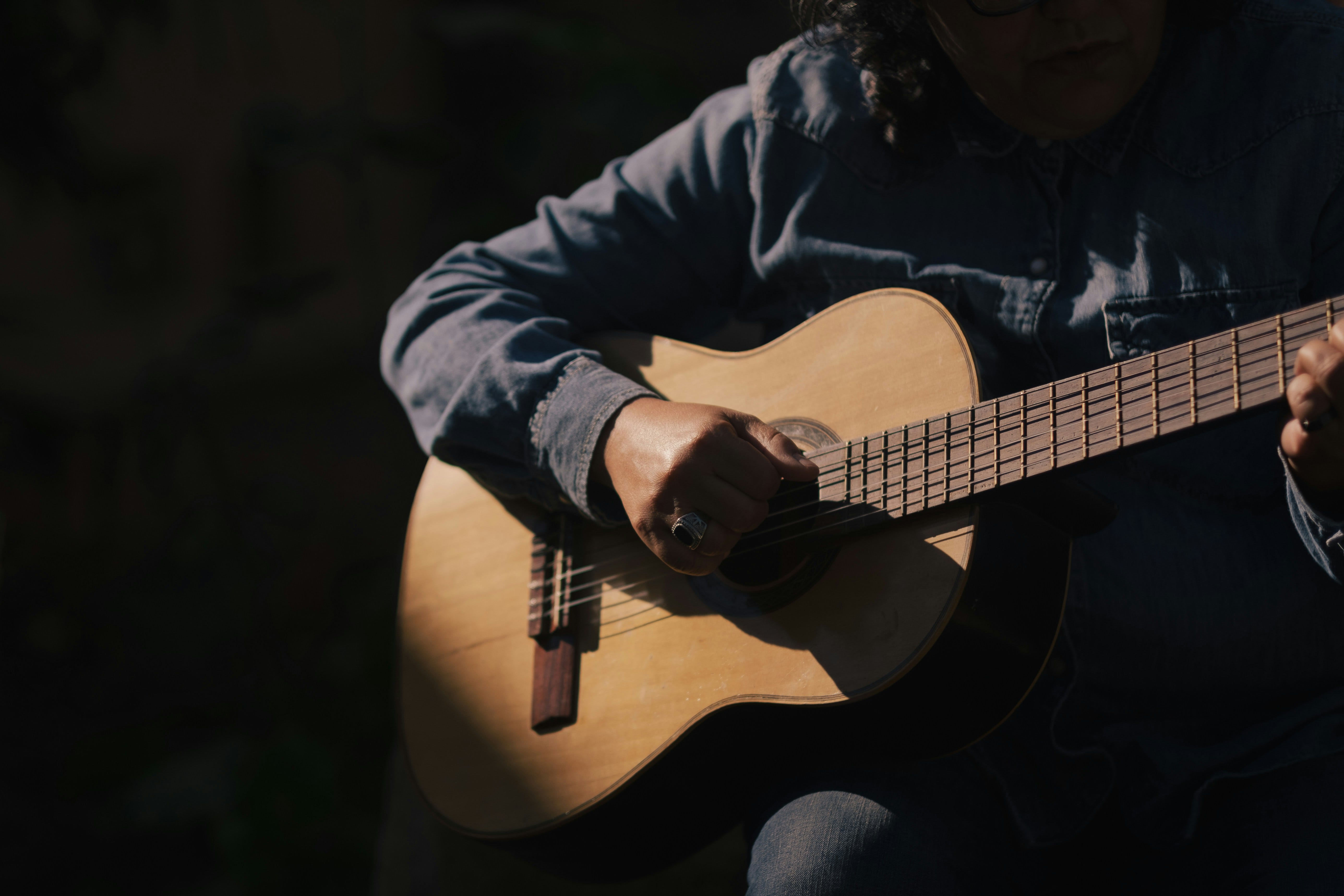
I don’t know yet whether my hands will get all the way back to where they used to be. I hope that they do. However, I know the songs are still in there waiting to appear, one awkward chord progression at a time.
And I know that whatever a person builds carefully inside has a way of outlasting even those parts we forget.
It’s built in there somewhere. And we have to find the courage and the space to let it out.
One characteristic at a time.
If this found you at the right moment, the free subscription means the next one will too.